2026 automatic cat feeder guide
Automatic Cat Feeder Guide 2026: 5 Reliability Checks
Start with food fit, schedule behavior, backup planning, cleaning access, and your cat's behavior before comparing cameras or apps.
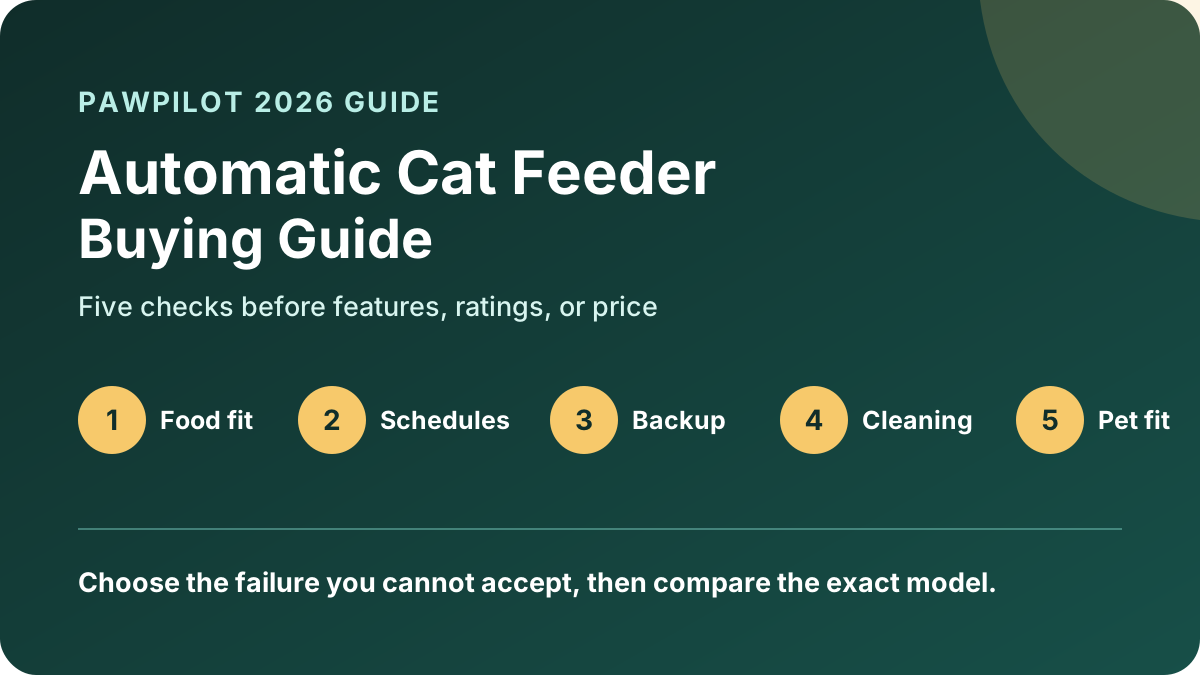
Before you buy
Use this as the filter.
- Does the exact model support the cat's current food size and shape?
- Does the stored schedule continue when the internet is unavailable?
- Is there a documented power option and a human backup plan?
- Can the bowl, hopper base, rotor, and chute be inspected and cleaned?
- Can another pet steal food or can this cat force the feeder open?
An automatic cat feeder should solve a specific household problem: meals happen too early, work schedules change, portions need more consistency, or a caregiver needs a safer way to handle occasional delays. It should not create a new problem around jams, cleaning, outages, or one cat stealing another cat’s meal.
Use this guide before comparing brands. The five checks below expose the failures that glossy product pages and long feature lists can hide.
Quick Answer
The best automatic cat feeder is compatible with the food already used at home, stores a dependable schedule, has a realistic backup plan, can be cleaned beyond the bowl, and matches the cat’s behavior. Cameras and voice features are optional control layers; they do not compensate for a weak dispensing path.
If you already know these requirements, continue to the best automatic cat feeders comparison. If not, work through the checks in order.
1. Confirm Food Compatibility
Start with the exact food, not the brand name on the feeder. Uniform dry kibble is usually the simplest fit for a hopper and rotor system. Large, irregular, oily, crumbly, or mixed-shape pieces can behave differently even when a listing provides a maximum size.
Check the current instructions for the exact model and compare them with the food used at home. Then test scheduled meals during the retailer return window. Watch for partial portions, dust buildup, pieces remaining in the chute, and different results after the hopper becomes less full.
Changing food can change feeder behavior. Repeat the test after switching recipes or kibble shapes. The smart-feeder food compatibility guide explains the common failure patterns in more detail.
Wet food is a separate category. A standard dry-food hopper should not be treated as a wet-food solution. Owners planning timed wet meals should compare exposure time, cooling, tray design, and cleaning in the wet-food feeder guide.
2. Test Schedule and Offline Behavior
An app can make schedules easier to create, but the important question is what the feeder does after the phone, home internet, or cloud service becomes unavailable.
Before relying on a feeder, confirm:
- where the schedule is stored;
- whether scheduled meals continue without internet access;
- whether the feeder has a manual feed control;
- what notifications mean and what they do not prove;
- how the device reconnects after an interruption;
- whether household members can manage the same feeder safely.
Run a brief Wi-Fi interruption while someone is home and compare the result with the current manual. A notification that a command was sent is not always proof that food reached the bowl. The smart-feeder app reliability comparison provides a more complete test sequence.
3. Build a Power and Human Backup Plan
Read the exact adapter and battery instructions for the model being considered. A backup power option can reduce risk during an outage, but it does not address an empty hopper, a blocked chute, spilled water, a sick pet, or a cat that did not approach the bowl.
Decide who can check the pet if the owner is delayed. For travel, the plan should cover food, water, litter, room temperature, health, and access to the home. An automatic feeder can support that plan; it should not become the plan by itself.
If one missed meal would create a medical concern, follow veterinary guidance and keep a more conservative supervision arrangement.
4. Inspect the Whole Food Path
A removable bowl is useful, but the bowl is not the only food-contact surface. Food dust and oils can collect around the hopper base, rotor, chute, seals, and seams. A feeder that is difficult to inspect is difficult to trust over time.
Before buying, review the current disassembly and cleaning steps. Ask whether the household will realistically complete them. During the return window, perform one complete cleaning cycle rather than judging maintenance from product photos.
Look for trapped crumbs, moisture, awkward corners, and parts that are easy to reassemble incorrectly. After cleaning, run several test portions before leaving the feeder unattended.
5. Match the Feeder to Cat Behavior
The feeder must work with the cat, not only the app. Some cats are noise-sensitive. Others push the unit, pry at lids, reach into the chute, eat too quickly, or guard the bowl.
Observe several scheduled meals and check:
- whether the dispensing sound causes avoidance;
- whether the bowl shape is comfortable;
- whether the feeder moves during use;
- whether the lid or chute can be manipulated;
- whether another pet reaches the meal first;
- whether the cat finishes portions or leaves food exposed.
For two or more cats, capacity is not the same as access control. Separate stations, distance, supervision, cameras, or identity-controlled feeders may be needed when pets have different diets or one cat steals food.
Features to Compare After Reliability
Once the five checks pass, optional features can improve convenience.
Camera
A camera may help confirm that food reached the bowl and show which pet approached it. Compare placement, visibility, storage terms, privacy, and whether the camera is included on the exact model. Do not assume a camera clears jams or proves how much food was eaten.
Portion controls
Feeder “portions” are device-specific units, not automatically veterinary serving sizes. Measure several dispenses with the actual food and translate the result into the feeding plan used at home.
Notifications and shared access
Useful alerts should be understandable and actionable. Review how multiple caregivers access the feeder, how account recovery works, and whether alerts distinguish a schedule event from a confirmed physical dispense.
Voice recordings and smart-home integrations
These can be pleasant extras, but they should rank behind food fit, offline behavior, power, cleaning, and pet behavior.
A Practical Return-Window Test
Keep the packaging and run a structured home test:
- Dispense the normal food multiple times at different hopper levels.
- Compare the resulting portions for obvious inconsistency.
- Run the full daily schedule while someone is home.
- Interrupt Wi-Fi briefly and observe documented behavior.
- Review the power-backup setup without assuming it guarantees a meal.
- Watch the cat approach, eat, and leave the bowl.
- Test the lid, stability, and chute against normal pet behavior.
- Complete one cleaning and reassembly cycle.
- Confirm that another caregiver can understand the controls.
Reject the feeder if the household cannot confidently explain what happens during an ordinary failure.
Frequently Asked Questions
What size automatic feeder should I buy?
Choose capacity only after checking food fit, available floor space, refill habits, freshness, and the manufacturer’s guidance. A larger hopper may reduce refills but does not improve dispensing reliability or multi-cat access.
Is an automatic feeder good for two cats?
It can support a shared routine when both cats eat safely together. It cannot guarantee equal access. Different diets, food stealing, or resource guarding may require separate or identity-controlled feeding.
Can I leave my cat alone because the feeder has an app?
No app can handle every food, water, health, power, or household problem. Use the feeder as one part of a human care plan.
Which brand should I compare first?
Start with PETLIBRO Granary for a balanced dry-food comparison, WOPET when model variety matters, and PetSafe Smart Feed when an established pet-care brand is the priority. Then verify the exact current model.
Bottom Line
Choose the failure you cannot accept, test the feeder with the real food and real cat, and keep a human backup. Only then compare cameras, app polish, or marketplace offers.
PawPilot’s automatic cat feeder comparison applies this checklist to three common shopping paths. The smart feeder topic hub connects the supporting guides on apps, food fit, wet food, and model reviews.
As an Amazon Associate, PawPilot may earn from qualifying purchases.
Recommended next step
Apply the checklist to current feeder options.
Compare PETLIBRO, WOPET, and PetSafe only after defining the household failure you cannot accept.